Parts, refits and synergies
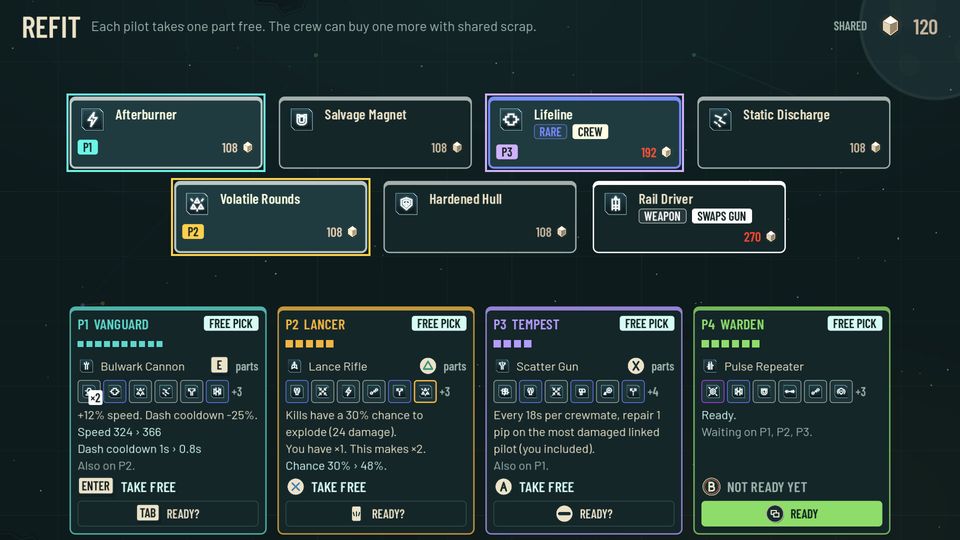
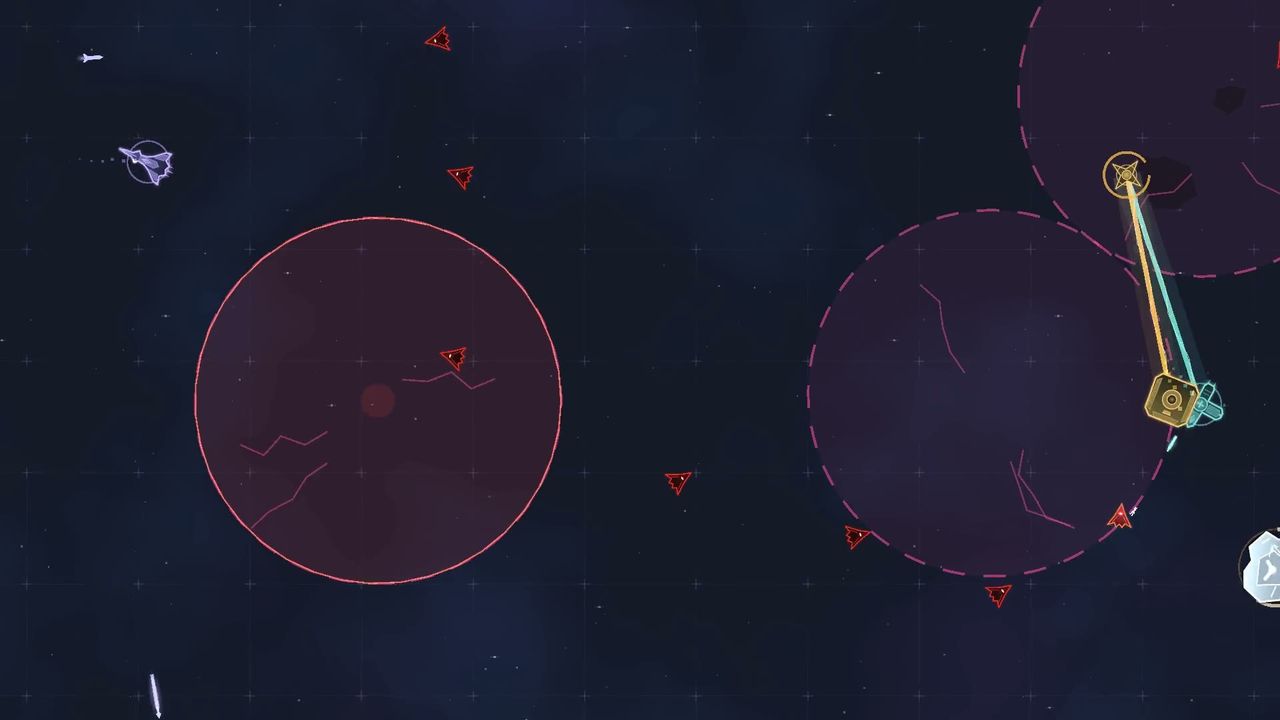
Void Runners has 59 parts, and most are triggers with effects rather than stat increases - dash to drop mines, drag linked crewmates clear, heal whoever on the web is hurt worst. The crew shares one refit table between jumps, and the right two parts fuse into a synergy.
Void Runners has 59 parts, and most of them are triggers with effects rather than bigger numbers. Between jumps the crew shares one refit table, and the combinations are the point of a run.
The refit table
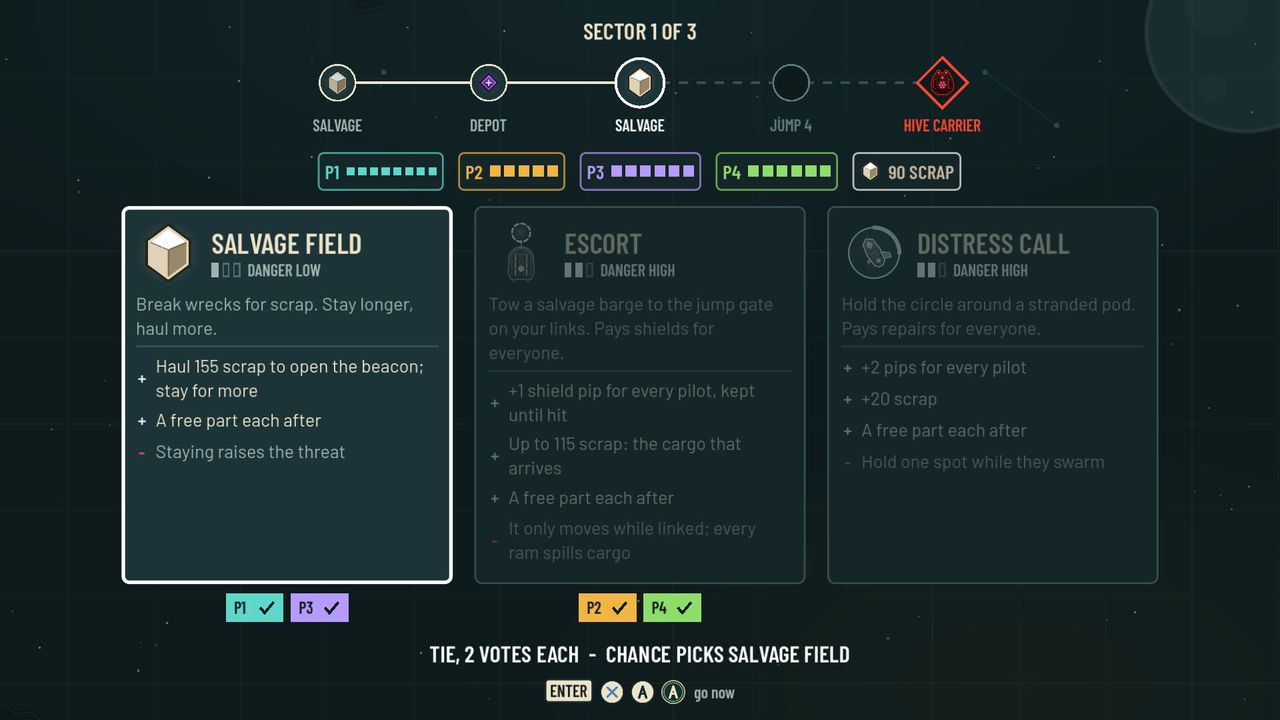
Between jumps the crew shares one refit table. Everyone takes a part free, and the crew can buy one more with shared scrap. A depot sells as many as you can afford, which is why docking is a real decision rather than a formality.
| Refit option | Cost |
|---|---|
| Taking a part at the table | Free, one per pilot |
| One extra at the table | Shared scrap |
| Depot stock | Shared scrap, as many as you can afford |
Triggers, not bigger numbers
The store page is specific about the design: most of the 59 parts are triggers with effects, not stat increases. The examples it gives are worth reading as a preview of the vocabulary:
- Dash to drop mines - a movement ability that leaves a hazard behind.
- Drag linked crewmates out of danger - a rescue that uses the beam link itself.
- Patch up whoever on the web is hurt worst - healing that reads the formation.
Synergies
Pair the right two parts and they fuse into a synergy. That is the loop inside the loop: the run gives you parts, and the interesting decision is which two are worth putting together rather than which single part is strongest.
Why formation and parts are one system
Because beams run between ships, a part that moves a crewmate or heals the most-hurt ship is really a part that changes the web. The sectors and guardians page explains the fields that interfere with those links.